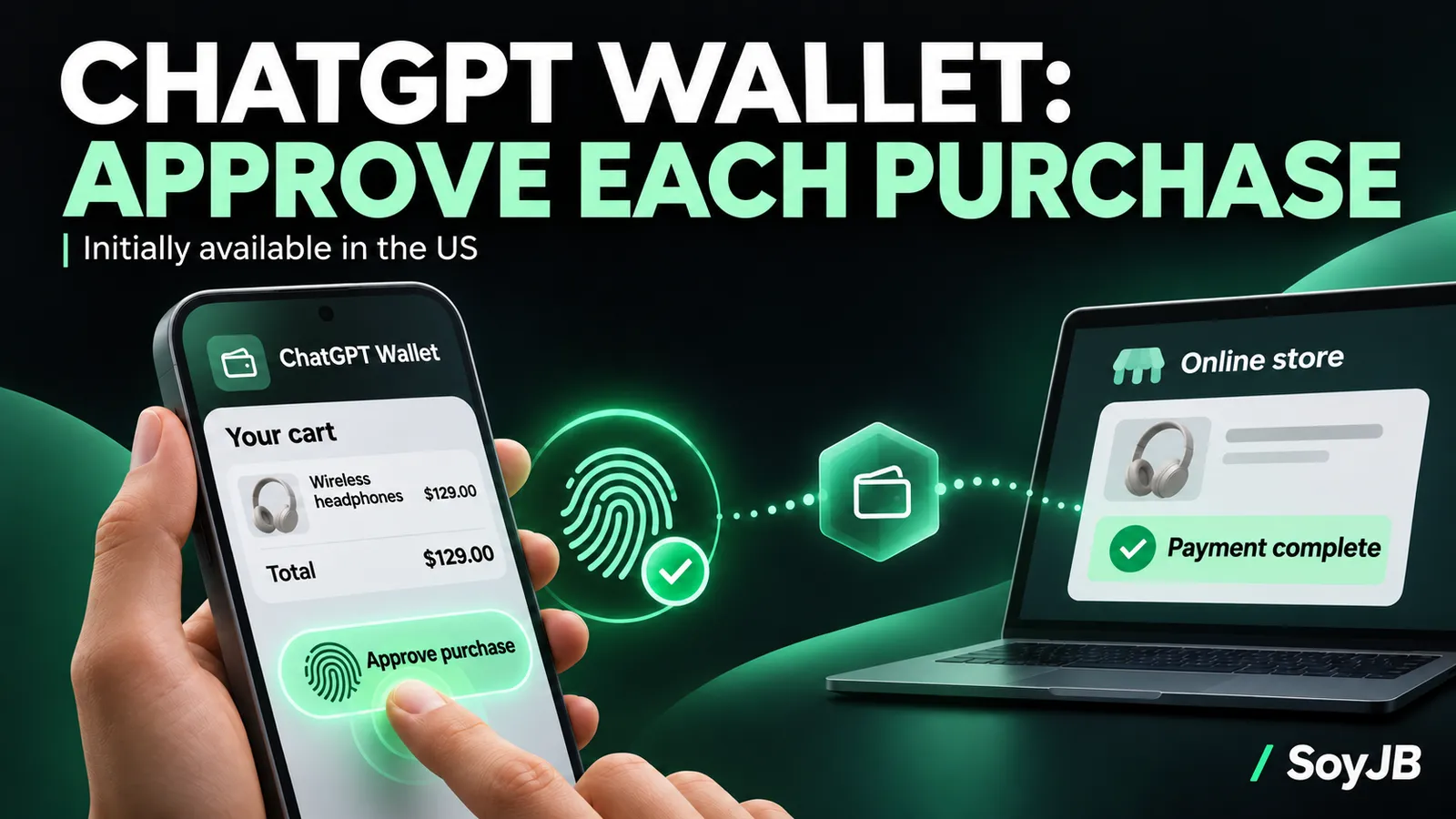
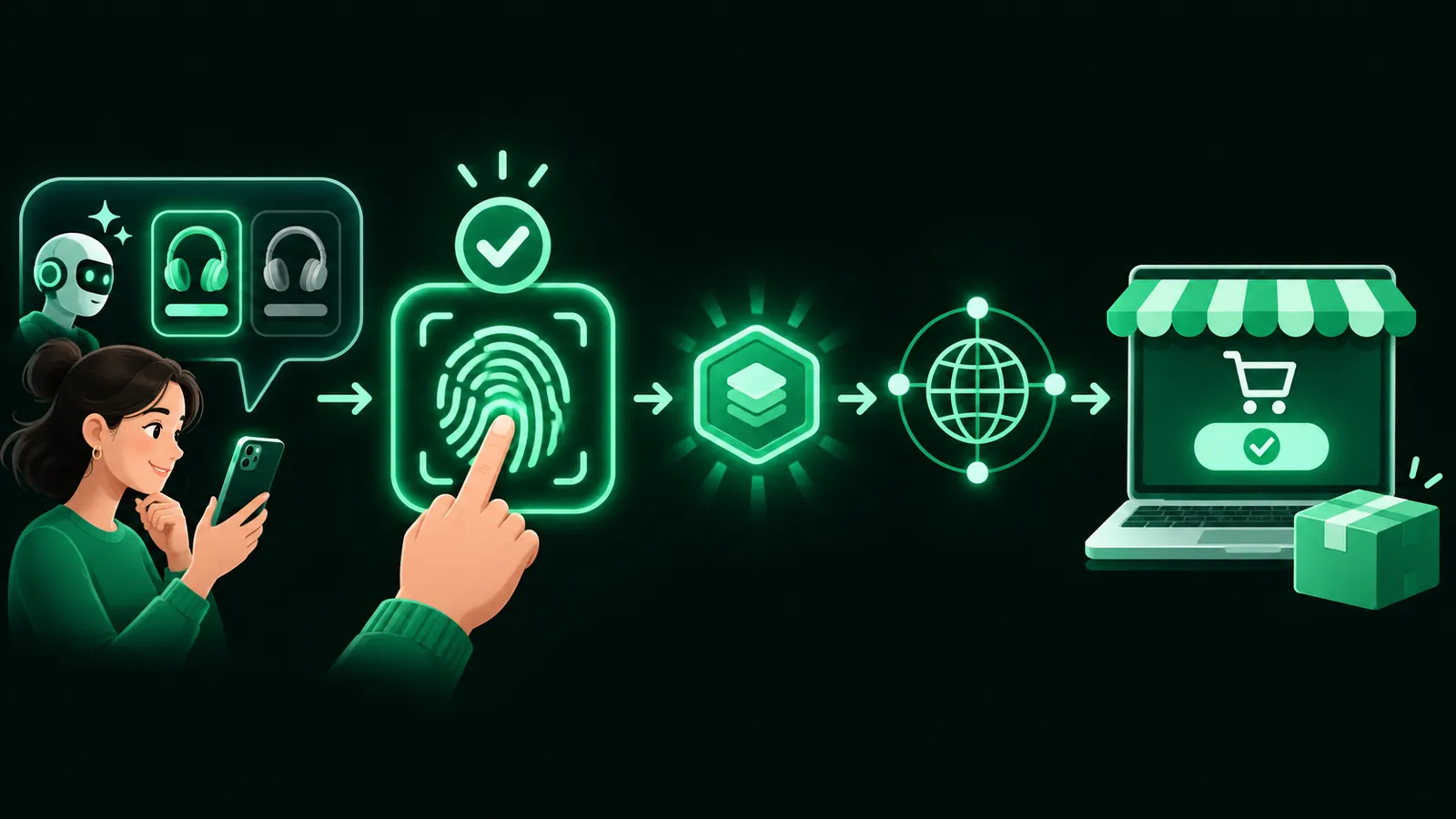
A shopper discovers a product in ChatGPT, compares options, and asks an agent to buy it. The decision may already lead to a store in a browser. ChatGPT Wallet starts to connect that journey to payment: the shopper reviews the item, total, and selected card, then approves each purchase with a security check such as Face ID or a fingerprint. For a small merchant, the immediate question is whether the existing product page and checkout can support the journey.
OpenAI announced Wallet on November 13, 2026. The initial rollout is in dots for ChatGPT Pro subscribers aged 18 or older in the United States with eligible US-issued cards. This is not broad ChatGPT availability and it does not establish that every store will gain sales. We have not completed a Wallet purchase ourselves; the behavior and access conditions below come from OpenAI's announcement and merchant documentation.
How the payment works
The shopper adds a card once. Before each purchase, they confirm the items, amount, and card. After approval, the payment network issues a payment token that the checkout can process, rather than revealing the actual card number to the agent or merchant. OpenAI says eligible disputes retain existing card protections and rewards. The transaction remains between the buyer and the business, which still controls pricing, fulfillment, returns, and support. American Express, Mastercard, and Visa are launch partners.
Keep the timeline straight. OpenAI discusses a possible future in which people preapprove purchases within spending limits, categories, or time windows. The initial version requires approval for every purchase. A headline suggesting an agent can freely spend from your card would overstate what launched.
What a merchant can check this week
- Verify product information. Name, current price, availability, variants, shipping charges, and return policy should agree across the product page and checkout. OpenAI's Commerce Partner Playbook separates your existing site, physical-goods feeds, and plugins; you do not have to build every component at once.
- Check agent browser access. A CDN or firewall may block a verified cloud-browser visit and break the flow. The access guide points merchants to actual blocks. Do not turn off general protections just because the announcement exists.
- Talk to your processor and fraud provider. A cloud browser can resemble automated traffic and trigger a false decline. OpenAI says it is rolling out user signals through the HTTP
Forwardedheader, but signals may vary by site. Observe real declines and ask how your providers handle the token and those signals. - Test your existing checkout. OpenAI's payment guide says Wallet can work with existing checkout forms without a Wallet-specific integration. That is a compatibility claim, not proof that your taxes, shipping, confirmation, receipts, cancellations, and support flow have been tested.
If you sell subscriptions, OpenAI says Wallet can work when your existing checkout supports recurring billing, with consent for recurring charges and your processor's best practices. Do not save or reuse the credential from one approved transaction for a separate purchase. The merchant does not receive the full underlying card number.
The founder's decision
If your buyers are outside the limited US pilot, monitor the rollout and keep product data and checkout clear; do not redesign the business around this announcement. If you serve eligible US buyers, map one complete purchase flow and record why a legitimate transaction fails before building a more involved integration. A plugin can expose structured actions such as checking stock or preparing a cart, but it is not required for browser access to your existing site. That lower-effort check can reveal a real obstacle first.
Primary sources: OpenAI's launch announcement and its merchant payment guidance. Event date: November 13, 2026. Access: limited US rollout. Availability elsewhere, conversion effects, and compatibility with any particular store remain unverified here.