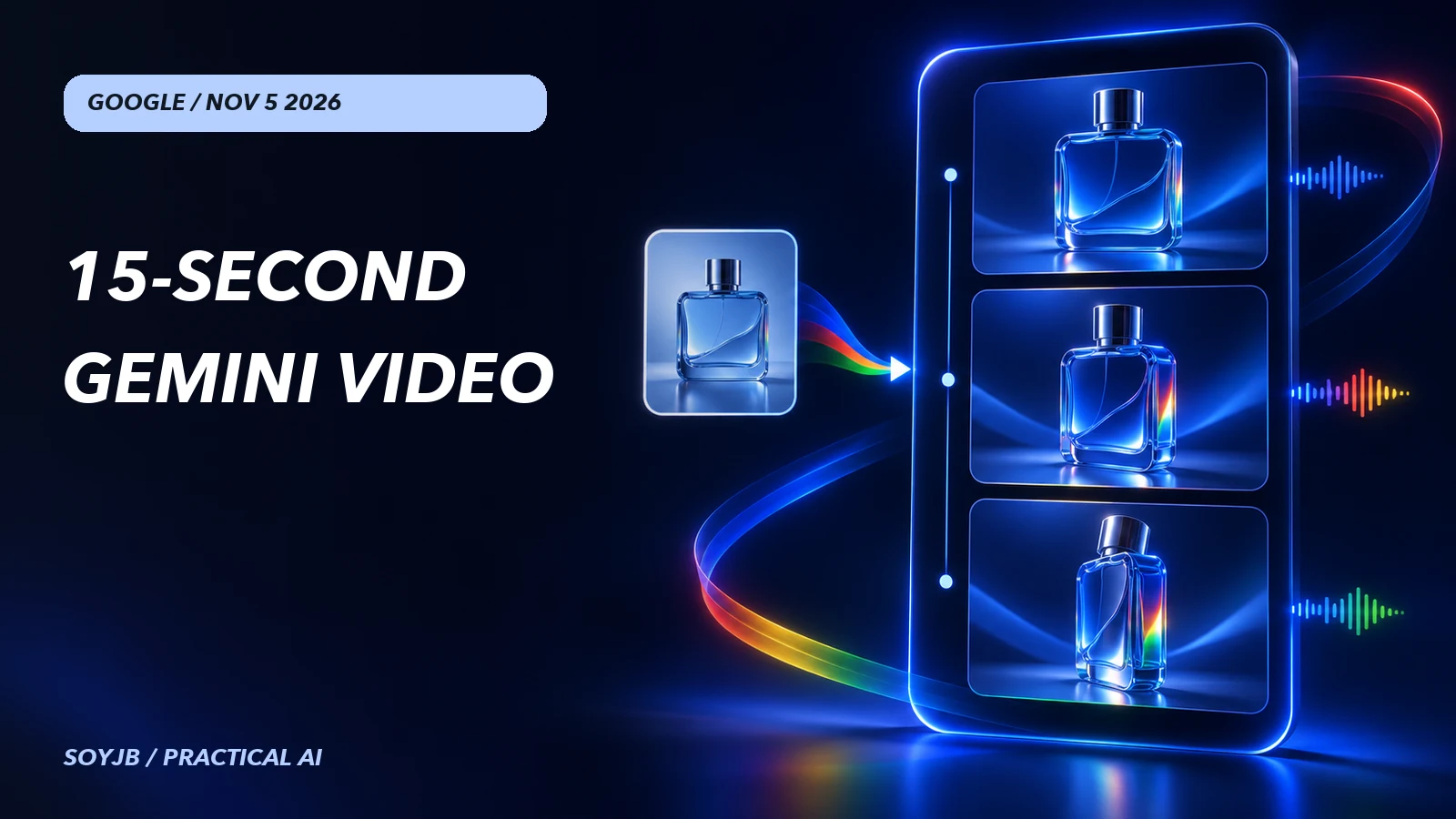
A creator has three product photos and needs a 15-second vertical ad. The hard part is not producing motion; it is keeping the packaging recognizable as the camera moves. On November 5, Google announced Gemini Omni 1.2 Flash with native clips up to 15 seconds, stronger reference consistency, and conversational edits to an existing clip. That makes a small, measurable creative test possible, provided you budget for retries and inspect the output.
What actually changed
Google's official announcement says duration can be set from 3 to 15 seconds in one-second increments; Omni 1.1 stopped at 10 seconds. Inputs can include character, product, and style images, a short motion clip, and audio cues. Google says the model follows these references more consistently and lets you request follow-up changes, such as a different background, without restarting. Those are vendor claims, not independent SoyJB test results or a promise that every package label will be accurate.
Gemini API and Google Cloud have general availability. Consumer-product access differs: Google lists Flow and Vids, while the Gemini app rollout is gradual for Ultra subscribers. Vercel AI Gateway also lists the model as google/gemini-omni-1.2-flash. Check account and regional access before promising a client a deliverable.
A test a small brand can run this week
Pick a real product whose imagery you own. Gather one front and one side photo, plus a short brand sheet with approved colors and any packaging details that must remain unchanged. Choose one claim that can be shown, such as “this notebook fits in a jacket pocket.” Ask for a 9:16, 15-second clip with three beats: the everyday problem, the product action, and a clean final frame where you can add exact copy later. Avoid asking the model to render legally sensitive claims or precise text inside the video.
Goal: 15-second vertical ad for [product].
Audience: [specific person and situation].
References: [your licensed product photos and brand guide].
Shot 1 (0–4 s): show the problem, with no generated text.
Shot 2 (4–11 s): realistic product use; preserve shape, color, and packaging from references.
Shot 3 (11–15 s): still product, simple background, room to add the headline in an editor.
Audio: subtle ambience; no borrowed music or voice.
Constraints: invent no features; do not alter the logo or label; 9:16 aspect ratio.
Return the clip and flag any reference detail you could not preserve.
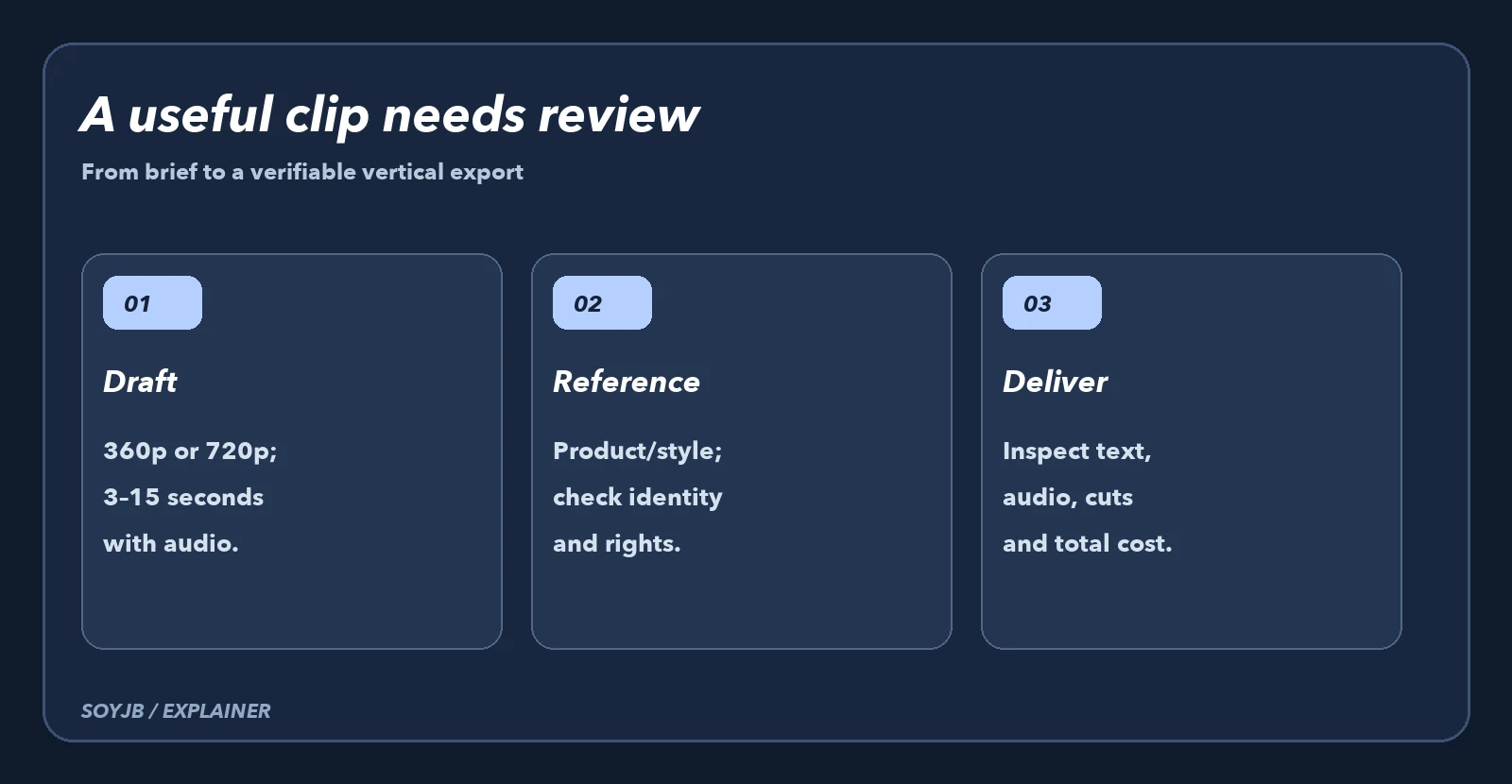
This is a brief to try, not a clip we produced. Generate a lower-resolution draft, then inspect product shape, hands, labels, and cuts frame by frame. If only the setting fails, try a conversational edit. If the product geometry changes, simplify the references and compare a fresh generation. Add subtitles and the final claim in your video editor so you can verify the spelling and meaning.
Budget and limits
Google lists $0.07 per second for 720p video and says that is 30% below Omni 1.1. At that rate, a 15-second generation would be $1.05 before any other options, taxes, or intermediary charges. Three such attempts would be $3.15 if billed on the same basis. Do not assume an edit, extension, or 4K upscale has identical pricing; check the rate card for the route you actually use.
Make the decision with two concepts, one set of references, and a written acceptance criterion. Count the attempts required for a usable clip, then compare that cost with filming or editing a template. Google itself notes remaining difficulty with fast sports action, rapid script changes, and complex physics. Any ad that depends on exact facts, rights clearance, or documentary accuracy needs human review before release.