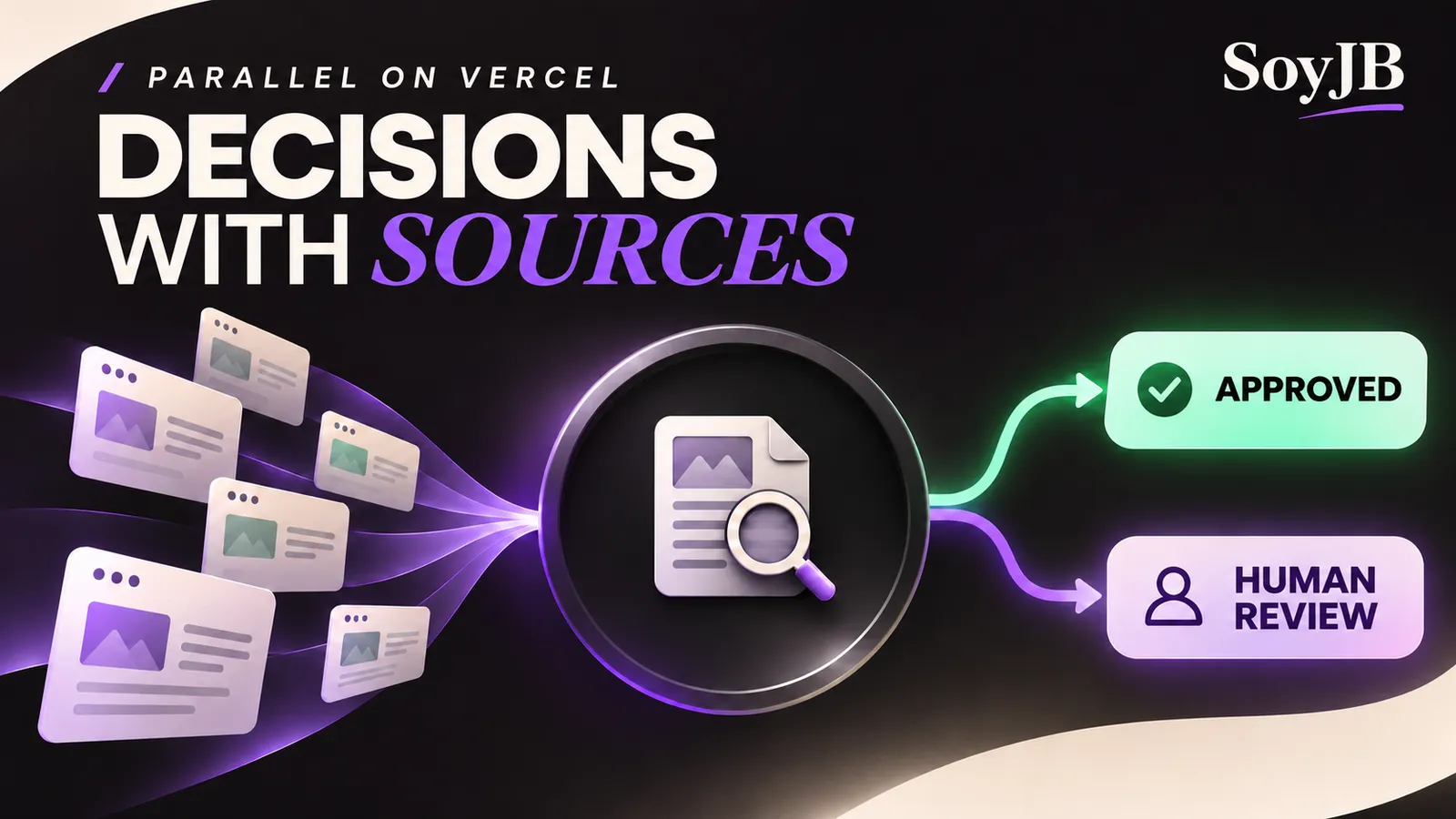
Your CRM marks a hundred companies as “API available,” but some changed their products this month. An agent relying on model memory can route leads using stale information. Parallel Decisions Fast answers closed questions using live web retrieval and returns probabilities with citations. As of November 13, 2026, it is also available through Vercel AI Gateway, free through November 23 according to Vercel. That window is an opportunity to test a real workflow, not proof that automatic decisions are safe. Vercel announcement.
What actually launched today
Parallel launched its Decisions API on October 25. Today's change is access through AI Gateway using parallel/parallel-decisions-fast, without a separate Parallel account and with Vercel budgets and request logs. Questions can return a yes/no probability, a choice from options you define, or a score on a rubric. Related questions can share context and retrieved evidence in one request. Original API launch · November 13 integration.
The useful distinction from a classifier that only reads your input is fresh web evidence. Ask whether a vendor still provides an official CLI, whether a feature is publicly documented, or whether SSO support has changed. The answer is still a model assessment. A high probability does not establish that a page is current or that its policy applies to your contract.
Run a small decision test
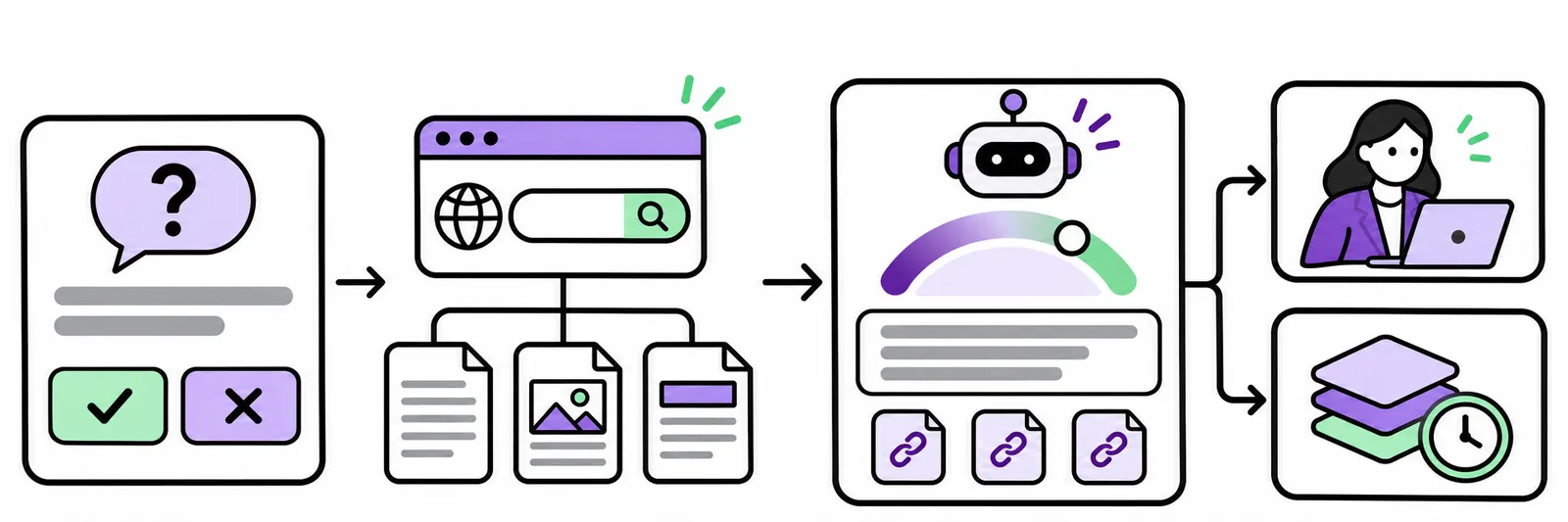
Pick ten vendors your team knows and ask one verifiable question, such as whether each publishes an official customer CLI. Record the correct answer and the vendor's official URL before calling the model. Compare its answer and citations with that baseline. Include negative and ambiguous cases: a third-party blog mentioning a CLI is not the same as vendor documentation.
This AI SDK example follows Vercel's published pattern and uses a placeholder company. It has not been executed by SoyJB; check your SDK version and account credentials before running it:
import { experimental_decide as decide } from 'ai';

const result = await decide({
  model: 'parallel/parallel-decisions-fast',
  state: { company: 'ExampleCo', website: 'https://example.com' },
  questions: {
    has_cli: {
      type: 'boolean',
      instructions: 'Does this company publish an official CLI for customers?'
    }
  },
  providerOptions: { parallel: { includeExcerpts: true } }
});

console.log(result.answers.has_cli);
console.log(result.providerMetadata?.parallel?.citations);
Do not wire the result directly into customer rejection, outbound email or bulk CRM edits. First count correct answers, errors and refusals across the ten cases. Store source URL, retrieval date and excerpt. Vercel notes that citations apply to the whole request, rather than being mapped to each individual answer, so manually confirm which source supports each decision before acting.
A founder's operating rule
Use the output to prioritize review: clear evidence from an official source, ambiguous cases for a person, and unanswered cases left unclassified. Your automation threshold depends on the cost of a wrong decision; there is no universal probability cutoff. Recheck pricing after November 23 because the Gateway promotion has an end date. Parallel lists direct API pricing of $1 per 1,000 requests with up to 100 related questions per request, but Gateway billing may differ and should be verified in your account. Direct product pricing.
The value here is a narrow question about changing information, cited evidence and a review rule. Skipping the source check would only automate a mistake faster.