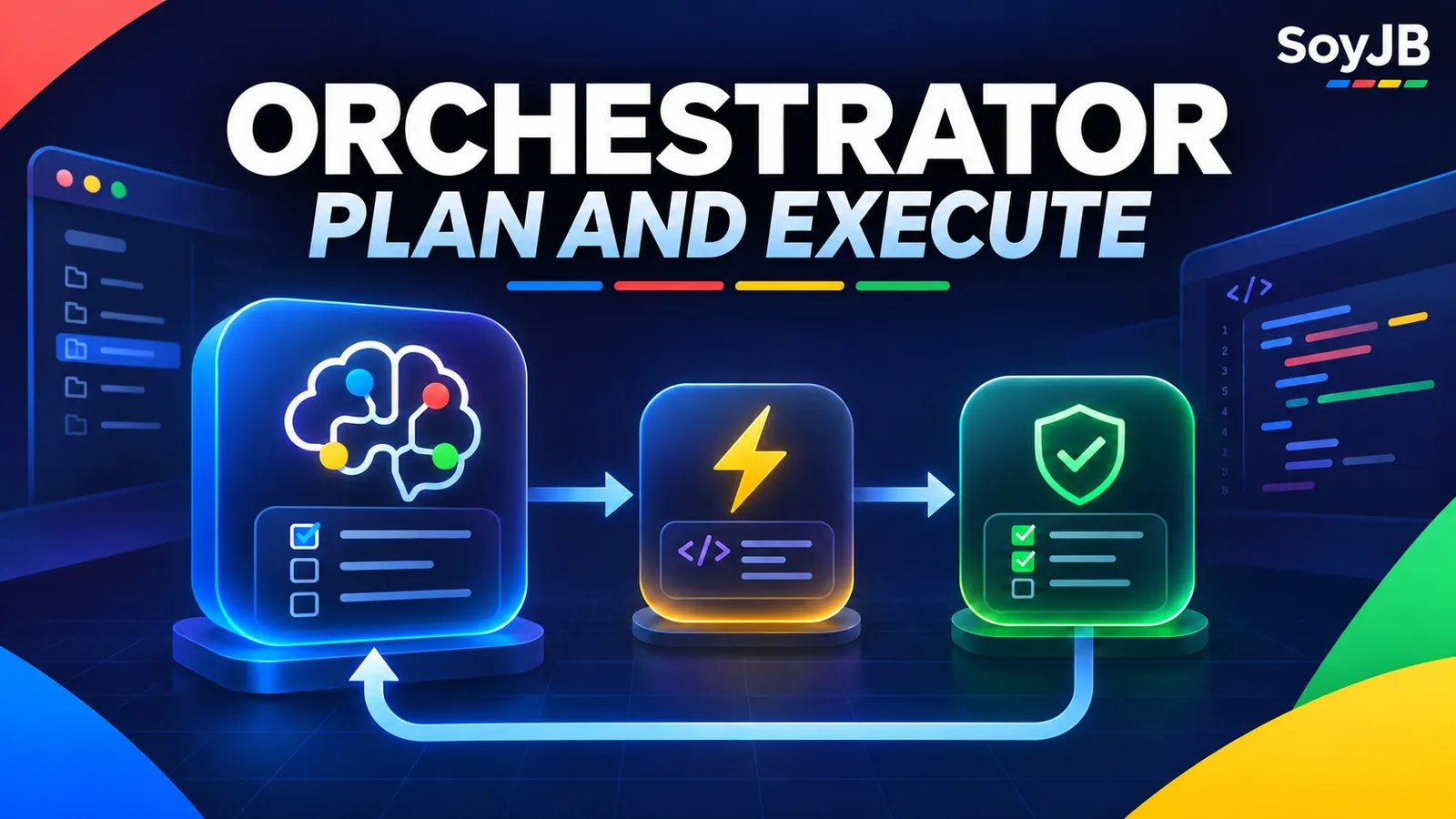
A sign-up bug crosses your form, API and database. A fast coding model may patch the first file it sees before understanding the flow; a frontier model may spend more time and quota on routine edits. Google Antigravity now offers a third workflow: a stronger model plans and reviews, Gemini 4 Hydrogen implements, and control returns to the planner when verification exposes a problem. The new model-selector option is called Orchestrator, announced on November 12, 2026. Official announcement.
How the handoff works
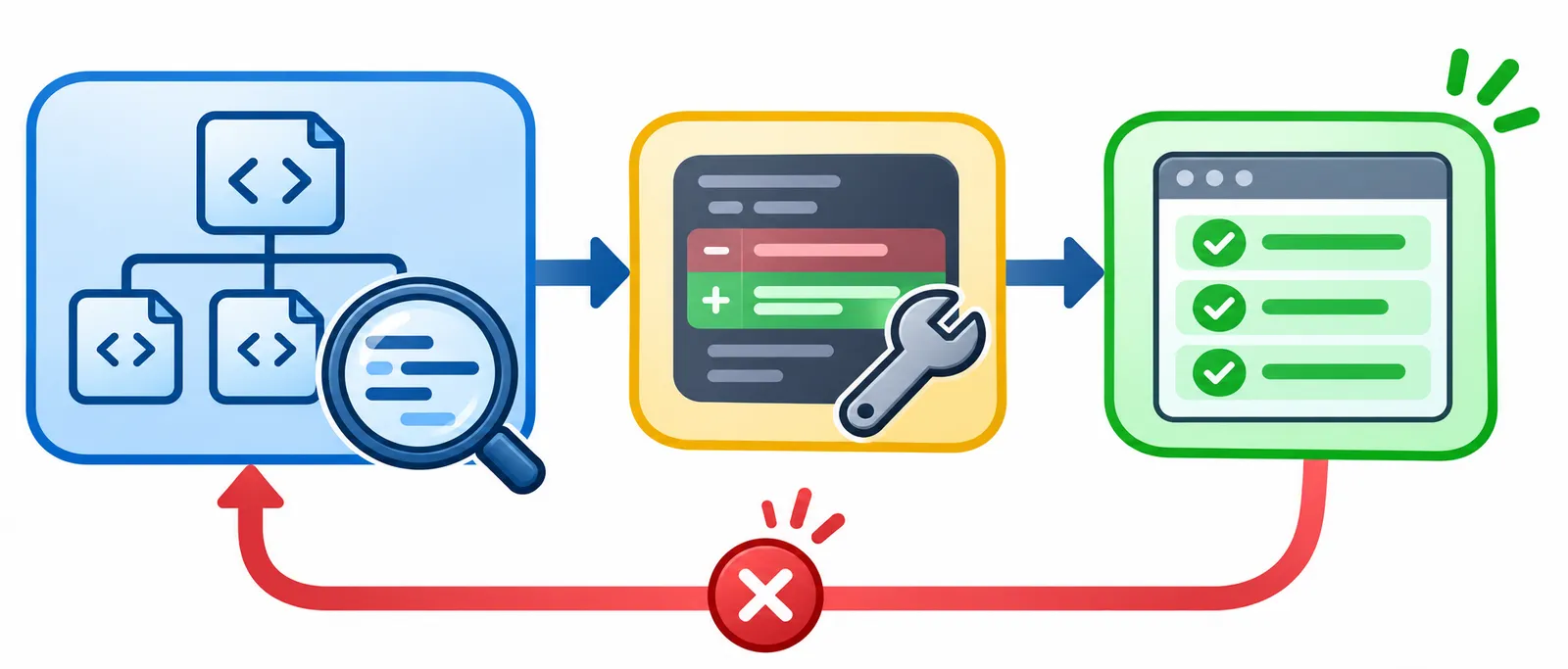
Orchestrator (Carbon) uses Carbon for planning and review and Hydrogen for edits, builds and tests. Orchestrator (Argon) uses Argon as planner with the same Hydrogen executor. They can hand control back and forth within one conversation as the task changes. This is not a router that selects a single model from your initial prompt, nor does it automatically launch a parallel agent team. That distinction affects your expectations about quota, speed and oversight. Google's model documentation.
Availability matters: Google lists Orchestrator (Carbon) for Google AI Ultra, and Orchestrator (Argon) for Ultra and paid Google AI Pro, including qualifying device trials. Hydrogen is rolling out to paid Pro and Ultra users. If the option is missing from your selector, check your plan, rollout and remaining limits before trying to force a CLI name. Enterprise access can differ. Launch note · Access table.
A bounded test on your own repository
- Choose a multi-layer bug with an existing failing test. Work in a branch and save the baseline test output.
- In Antigravity, choose Orchestrator (Argon) if your Pro account offers it, or (Carbon) on Ultra. The app selector sits under the prompt; the CLI exposes options through
/model. Select what is actually listed for your account. - Ask for a read-only diagnosis first, an evidence-based hypothesis, a small patch and test execution. Specify when the agent should ask for context rather than guess.
- Review the plan, then the diff and tests. If verification fails twice, watch whether the planner revises the hypothesis or simply repeats the patch.
Copyable task prompt:
Investigate why sign-up fails when the email address contains a + sign. Before editing, trace the form, API and validation, then summarize the likely cause with specific files. Propose the smallest patch and a regression test. Run the existing and new tests. If verification fails twice or a contract is ambiguous, stop editing, revisit the hypothesis and tell me what decision you need. Do not touch secrets, production or unrelated files.Replace that example with a real bug in your repo. If you have enough quota, repeat the same task on a clean branch with Hydrogen alone. Compare elapsed time, quota, calls, changed files, passing tests and human rework. Google reports near-Carbon task success with 24% less quota and 19% less time in its own evaluation. Those are vendor results, not a predicted saving for your codebase. Google's published findings.
When to choose a direct model instead
For straightforward copy changes, a simple package bump or a well-specified test, Hydrogen alone may avoid unnecessary planning overhead. For difficult architecture or concurrency problems, you may prefer Carbon or Argon on every step. Orchestrator has a fixed configuration, so you cannot tune its thinking level. Its planning review does not remove your responsibility to run tests, inspect the diff and approve the outcome. Official selection guide.
The practical decision: try Orchestrator on a bug that truly requires investigation before editing. Keep it as your default if it reduces rework within your available quota. Switch back to a direct model when it adds handoffs without improving the result. This is a SoyJB evaluation plan; we have not run the example in a Google AI Pro or Ultra account.