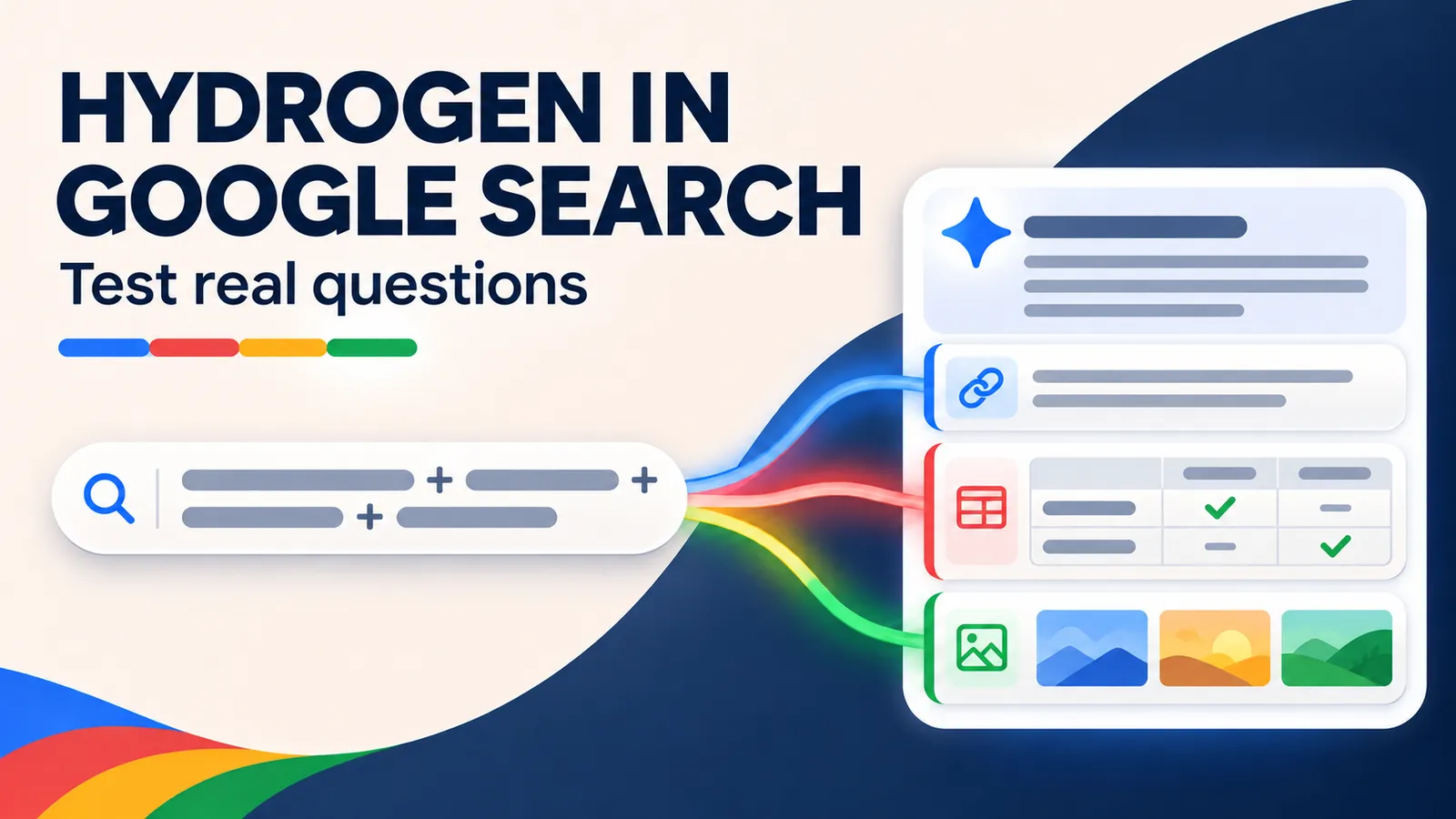
You published a guide that solves a specific problem, but a complex Google query may now produce a table, images, and links before a reader reaches your page. On November 12, 2026, Google announced Gemini 4 Hydrogen for Search globally. A creator’s next move is not to rewrite every headline. It is to inspect what Search answers, which sources it shows, and which part of the reader’s problem remains unresolved.
Google Search’s announcement says Hydrogen handles multi-part intent, fans queries out across related topics, and produces more visual answers with links. Google describes a global rollout; exact presentation may vary by query, language, account, and search surface. The announcement does not prove that any individual page will gain or lose clicks.
How a real question changes the task
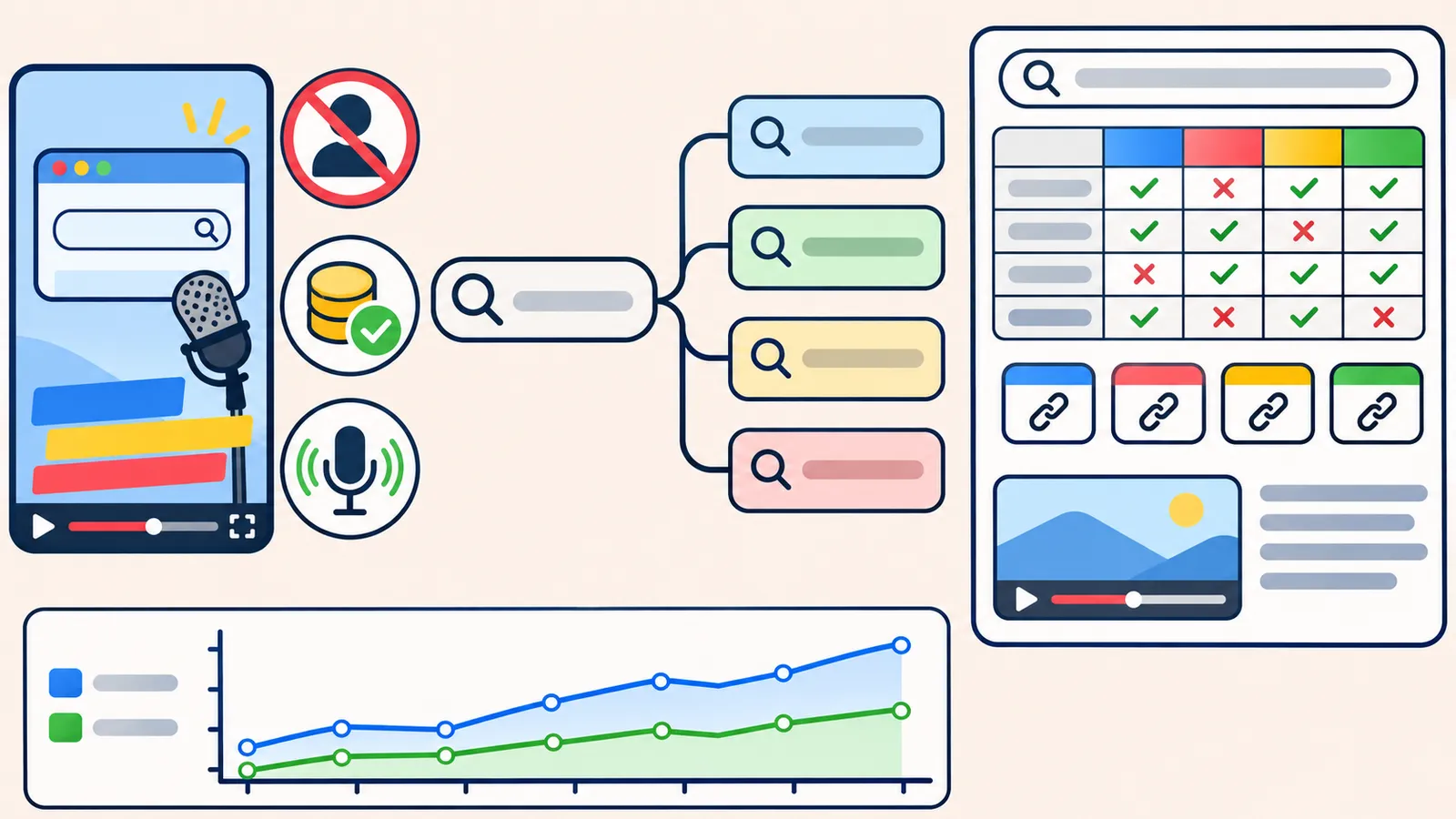
“Subtitle tool” is broad. A real user might ask: “My vertical video has subtitles burned into the picture. I want to remove them without an account and keep the original voice. What can I try for free, and what will look bad?” Search can break that into several needs and show comparisons. A useful page should distinguish editable captions from burned-in text, explain quality limits, and help the user check the result. Repeating keywords cannot replace that answer.
A 20-minute audit for a blog or store
- Choose three established pages and three real audience questions. Avoid judging yesterday’s posts; Search Console data can lag.
- Add a real constraint to each question: budget, language, device, or format. For example: “I need a 15-minute interview transcribed without installing software, and I need proper names to be accurate. What should I review?”
- In Google Search, record date, country, language, and a screenshot. Note whether an AI answer appears, which links it cites, whether sources are original, and what remains unanswered. One missing citation is not evidence of a traffic decline.
- Open the cited pages. Do they provide reproducible steps, current prices, real limitations, and evidence? If your page already serves the same intent, improve that URL instead of publishing a duplicate.
- Repeat in two weeks. Compare complete, similar Search Console windows by query and page, checking clicks, impressions, and position alongside seasonality and new content.
A private worksheet is enough: question → Search answer → visible sources → missing detail → possible edit → review date. Do not attribute every click change to Hydrogen. Search Console reports search clicks and impressions; it cannot tell you how many people read or trusted a generated summary.
What should you publish next?
If Search summarizes a definition well, focus on what readers still need to do: a verifiable example, a template, a calculation with explicit assumptions, or a comparison run on the same task. If you find a new question, first check that it differs from the intent of existing URLs. For bilingual content, test natural questions in both languages; literal translations do not always match how each market searches.
Google’s post describes product changes, not a new ranking rule. Its helpful content guidance still applies. SoyJB has not verified a personalized Hydrogen answer or measured a causal traffic effect. This is a proposed editorial audit, not an SEO guarantee.
Sources: Google Search, Nov 12, 2026; Hydrogen launch; Google Search Central.