A test worth running today: your coding agent reads a repository, searches docs, changes a screen, and explains the result. Each step takes time and tokens. Google introduced Gemini 4 Hydrogen on November 12, 2026 as a faster Gemini 4 option for this work. The useful question is whether your own workflow finishes sooner at an acceptable cost without losing quality.
What launched, and where can you use it?
The Gemini API model ID is gemini-4-hydrogen. Google lists it in AI Studio and the Gemini API on both rate-limited free and paid tiers. Antigravity can use it for agent execution; consumer-product availability may depend on plan and rollout. Vercel also added it to AI Gateway as google/gemini-4-hydrogen. That is an access path to the same model, not a separate release.
Google's technical guide lists four thinking levels: low, medium, default high, and xhigh. Input, thinking, and output share a 1,048,576-token context window. This does not mean an ordinary synchronous reply can emit a million tokens: each synchronous hop is capped at 65,536 tokens; longer output needs background execution or client-side continuation.
Why builders and creators should care
For a coding agent, choose an end-to-end task: read three files, implement a small change, and run one check. Record whether it works, how long it takes, tokens used, and human fixes. A creator can use a sourced brief to produce a script and three headline alternatives, then check every factual claim. Google reports speed and factuality gains over Gemini 3.8 Flash. Those are vendor claims; SoyJB has not independently reproduced them.
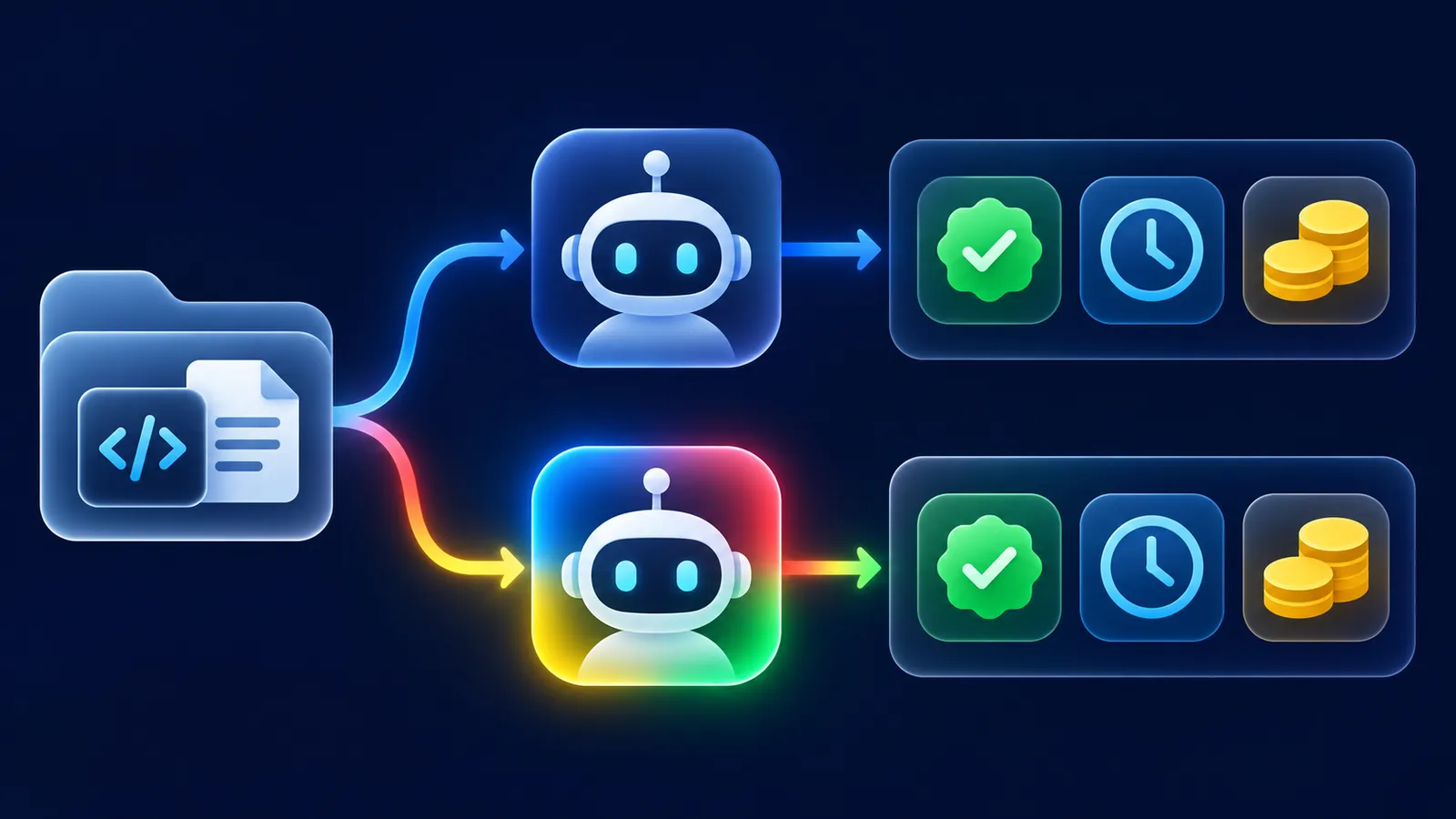
A ten-minute evaluation
- Pick a task you have completed before and save its input, relevant files, and expected result.
- Choose Hydrogen in AI Studio, or set
gemini-4-hydrogenin your application. If it is absent from a particular product, check its plan and rollout. - Run the same task at
mediumandhigh, keeping prompts, tools, and pass criteria fixed. Tryxhighonly when the hard case warrants it. - Log functional success, human intervention, latency, and billed tokens. Compare those numbers with your existing model before switching.
Google lists standard paid pricing at $1.50 per million input tokens and $7.50 per million output tokens, including thinking. The free tier is rate-limited. More reasoning may raise cost even when the final response is short. Check rate limits, caching, and tool charges before estimating production spend.
What to decide this week
Add Hydrogen to a small evaluation if you run repeatable coding or agent tasks. Do not replace every production call based on an announcement. Migrating from Gemini 3.8 Flash involves more than changing the model ID: Google's checklist calls out explicit caching, sampling parameters, thinking level, and conversation state. If your workload is cheap, high-volume classification, benchmark the family's lower-cost choices as well.
What we did not verify: we did not make an authenticated API call or run independent benchmarks. Availability, prices, and limits come from official sources checked on November 12, 2026.
Sources: Google announcement, Google technical guide and pricing, Vercel changelog.